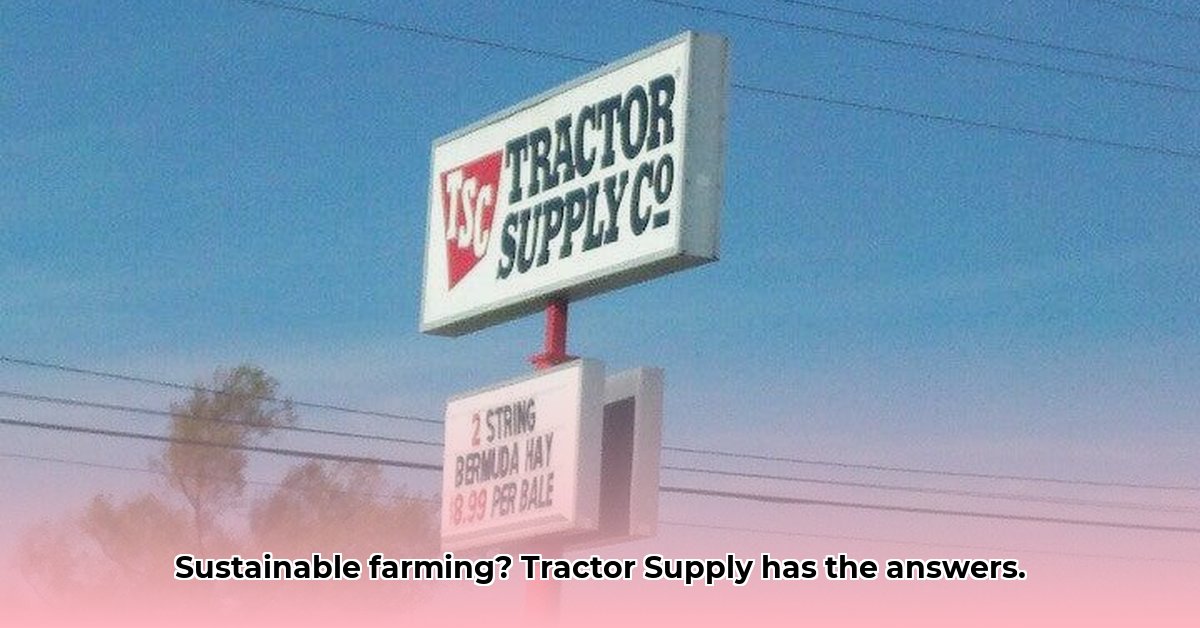
Tractor Supply Bentonville's Role in Sustainable Agriculture
Tractor Supply Company (TSC) in Bentonville, Arkansas, serves as a vital supplier for local farmers and ranchers. This article examines TSC's role, both direct and indirect, in promoting sustainable agricultural practices within the Bentonville community. We will analyze the store's offerings, compare them to competitors focused on sustainability, and explore stakeholder perspectives to identify opportunities for improvement. For another perspective on TSC's operations, see this White Hall location.
Tractor Supply Bentonville's Product Offerings
TSC Bentonville offers a wide range of products, including animal feed, fencing, tools, seeds, and irrigation systems. While the store's sheer size and product diversity suggest a significant influence on local farming practices, the extent of its contribution to sustainable agriculture remains unclear. For instance, a substantial portion of the store's floor space is dedicated to livestock feed; however, the sustainability of these feed sources (organic certification, ethical sourcing) is not readily apparent. This lack of transparency presents a major hurdle in a comprehensive assessment. How much of the store's inventory directly supports sustainable farming? What percentage of sales are made up of organic or sustainably sourced materials? Without access to TSC's internal data, we cannot provide precise figures.
Analyzing TSC's Contribution to Sustainability
TSC's direct contribution to sustainable agriculture includes the sale of organic seeds and water-efficient irrigation systems. However, the prominence and overall volume of these products are unknown. TSC's indirect contribution is arguably more significant. By supplying farmers with essential tools and materials, the store facilitates efficient farming practices, potentially leading to reduced waste and increased yields. But this indirect contribution remains speculative in the absence of empirical data. Does the convenient access to supplies at TSC truly translate into more sustainable farming practices? This requires further research and data collection.
Data Gaps and Transparency
A significant challenge in evaluating TSC's role is the lack of publicly available sustainability metrics. TSC’s environmental impact, from sourcing to packaging to transportation, remains largely undocumented. We lack concrete data on the lifecycle assessment of their products. Are their products sustainably packaged? We do not know. This transparency deficit hinders a complete and objective analysis of the company's environmental responsibility.
Comparison with Competitors
A comparison with competitors explicitly focused on sustainable agriculture is crucial for context. Specialized retailers may offer a wider range of certified organic seeds, eco-friendly tools, and other sustainably sourced products. Such comparisons would reveal TSC's competitive standing within this increasingly important market segment. How do their sustainability credentials measure up against more specialized competitors?
Stakeholder Perspectives: Farmers, TSC, and Consumers
Local farmers are heavily reliant on TSC for supplies. Their perspective on the availability and accessibility of sustainable options within TSC is critical. Do they perceive TSC as a supporter of sustainable practices? TSC management's commitment to sustainability, including any internal initiatives or planned actions, greatly influences the company's overall sustainability profile. Consumers also play a vital role, as their purchasing decisions can directly affect the demand for sustainable products. Understanding these diverse viewpoints is essential for a holistic evaluation.
Recommendations and Conclusion
To strengthen its commitment to sustainable agriculture, TSC should prioritize several key steps:
- Conduct Customer Surveys: Gauge customer demand for sustainable products and identify areas for improvement in product selection.
- Enhance Product Transparency: Clearly label and promote sustainable products within the store.
- Invest in Supply Chain Transparency: Conduct a comprehensive Life Cycle Assessment (LCA) of its supply chain and publicly share the results.
- Collaborate with Local Farmers and Organizations: Partner with local farming communities to share best practices and improve sustainability education.
- Publish a Sustainability Report: Provide annual updates regarding its sustainability initiatives and environmental performance. Implementing these recommendations would enhance TSC’s contribution to the sustainable future of Bentonville’s agricultural community.
While Tractor Supply Bentonville plays an important role in supporting local agriculture, its contribution to sustainable practices remains partially obscured due to limited data accessibility. Increased transparency and a proactive approach to sustainable product offerings are essential for a more positive and measurable environmental impact.